Kategorien
Bookkeeping

practical capacity

Understanding the practical capacity of resources is vital for effective operations management. Practical capacity strikes a balance by providing a more achievable and realistic forecast of production and service levels. You have to cover your fixed costs, come what may. What you’ve just seen is an example of the risks of looking at fixed costs per unit. You determine that the financial services division can generate 2,500 hours, and the medical division can generate 2,000 hours. Next, you take a look at the same calculation, using practical capacity.

This highlights the cost of unused capacity. The unused capacity cost Rs.3,00,000 (i.e. Rs.9,00,000 – Rs.6,00,000) will not be allocated to the user department. Variable costs are allocated based on actual usage. External factors causing reduction in production i.e. lack of orders from customers are not considered in this capacity. This capacity is taken as the maximum capacity for all practical purposes.

Plant Capacity Level: Type # 2. Practical Operating Capacity:

  • For the past 52 years, Harold Averkamp (CPA, MBA) hasworked as an accounting supervisor, manager, consultant, university instructor, and innovator in teaching accounting online.
  • Capacity definitions directly influence how fixed manufacturing overhead is allocated to the balance sheet.
  • Clinical Professor of Neurology and Biomedical Informatics
  • (i) Allocate the power plant’s cost to the cutting and the welding department using a single rate method in which the budgeted rate is calculated using practical capacity and costs are allocated based on actual usage.
  • Annual budgeted practical capacity fixed costs are Rs.9,00,000 and budgeted variable costs are Rs.4 per machine-hour.
  • Theoretical capacity assumes that nothing in your production ever goes wrong.

This continuing education activity has been planned and implemented in accordance with the standards of the ADA Continuing Education Recognition Program (ADA CERP) through joint efforts between the American Association of Orthodontists and Oakstone Publishing. ADA CERP does not approve or endorse individual courses or instructors, nor does it imply acceptance of credit hours by boards of dentistry. It is the CME activity provider’s responsibility to submit learner completion information to ACCME for the purpose of granting credit. Successful completion of this CME activity, which includes participation in the evaluation component, earns credit toward the Lifelong Learning and Self-Assessment requirements for the American Board of Ophthalmology’s Continuing Certification program.

It is an estimated budgeted capacity attainable in a budget period and is based on the rated capacity after taking into account loss of output or capacity normally incurred. It makes allowances for repairs, maintenance, normal delays and normal idle time but it disregards loss of output due to major breakdowns, abnormal delays or abnormal idle or lost time. This capacity may be between the practical capacity level and the capacity based on sales expectancy or even below it. This is the cent per cent rated capacity of a plant i.e. maximum possible capacity which may be achieved without interruption and without any loss of operating time. The advantage of the practical capacity approach to costing is that it allows the accountant to quantify the cost of not using the capacity. The other advantage of the practical capacity approach is that it is additional paid in capital possible to calculate the cost of the unused capacity.

Example of Practical Capacity

Normal capacity is the annual machine hours that have occurred over a span of several years. Practical capacity is less than its theoretical capacity. However, to account for regular maintenance, machine setup, employee breaks, and holidays, the realistic output is reduced. Obviously, theoretical capacity is virtually unobtainable. This activity is also eligible for credit hours in Category 2-B of the Continuing Medical Education Program of the American Osteopathic Association, provided it is completed in its entirety. The American Board of Radiology accepts this CME-certified activity toward the AMA PRA Category 1 Credits™ requirement as established in the maintenance of certification criteria.

(iv) Under the dual rate method as in requirement (III), the allocation to each department is same as the allocation achieved using single rate method in requirement (i). The capacity based on expected sales is, therefore, the capacity required to meet the demand or sales. If the concern is not able to sell the entire quantity produced due to lack of demand, it will not work at full capacity.

The single cost allocation rate is multiplied by actual hours (usage) to apply costs to each division. The practical capacity hours are higher than budgeted hours (4,500 versus 3,800). After accounting for those types of production stoppages, you can calculate practical capacity.

  • Obviously, theoretical capacity is virtually unobtainable.
  • In the previous chapter, I explained that one advantage of activity based costing is that we can treat more variables as varying based on the activities of the organisation.
  • The period is taken as such so that it may cover two or three years according to the period of normal business cycle and seasonal variations.
  • By focusing on practical capacity, businesses can better manage costs and improve operational efficiency.
  • It is a key concept in cost accounting, used to determine the most efficient use of resources and to set realistic production goals.
  • Constraints suffered by capacity include faltering production processes, lacking human resources, and technical limitations.

This variance is the Idle Capacity Cost, representing the budgeted fixed overhead that was not absorbed by production. Fixed overhead is applied to Work-in-Process (WIP) inventory based on the actual activity level achieved. The calculated rate, such as the $50.00 per machine hour, is used consistently throughout the period. Unavoidable downtime includes scheduled maintenance, safety inspections, shift changeovers, and employee break times.

Peak capacity refers to the absolute maximum production level a plant can achieve under optimal conditions for a short period. Theoretical capacity is the maximum output capability, assuming 100% efficiency with no downtime. In this case, even though the bakery theoretically could produce 240 loaves of bread in a turbotax review day, its practical capacity is only 55 loaves. Let’s consider a hypothetical bakery to illustrate the concept of practical capacity. Understanding practical capacity helps a business set more realistic production targets and expectations.

Oakstone Publishing is accredited by the Accreditation Council for Continuing Medical Education (ACCME) to provide continuing medical education for physicians. Cleveland Clinic Foundation Abu Dhabi, United Arab Emirates Cleveland Clinic Abu Dhabi Cleveland Clinic Lerner College of Medicine of Case Western University

Fundamentals of Practical Capacity: Operations Management Basics Quiz

In reality, the organisation would have to use its understanding of the production process to calculate the  the theoretical capacity. I assume that the used capacity for the critically important rolling machine, 8.26 million minutes, is the theoretical capacity for all the machines. In the calculations, I will use the case of the finishing machine for which the costs of the machines is $1.28 million, the cost of maintenance is $0.78 million, and the power cost is $0.87 million.

Your production and engineering staff can answer questions about machine capacity and repair time. This $50.00 rate is then used to assign fixed costs to the products as they move through the Work-in-Process inventory. If the total annual budgeted fixed overhead is $3,723,000, and the Practical Capacity is 74,460 machine hours, the rate is determined as $50.00 per machine hour. Practical capacity adjusts this ideal level to reflect unavoidable interruptions such as maintenance, setup time, and employee breaks.

In manufacturing, practical capacity is used to estimate the realistic output of production lines. By focusing on practical capacity, businesses can better manage costs and improve operational efficiency. This is a simplistic example, but it demonstrates how practical capacity takes into account real-world conditions that can limit production. The practical capacity rate is consistently applied to all production, regardless of plant utilization.

Using Software to Calculate and Monitor Production Capacity

This cost is expensed directly on the Income Statement, typically by debiting Cost of Goods Sold or Idle Capacity Expense. The Idle Capacity Cost arises because the total fixed overhead applied to WIP is less than the total budgeted fixed overhead. Inventory valuation remains stable because the fixed overhead assigned per unit is based on the facility’s efficient operating potential, not its current demand. This charge ensures that inventory is valued at its full manufacturing cost, a requirement for GAAP-compliant financial statements. The calculation must not include downtime related to economic factors, such as idle time due to low sales or excessive scrap. These interruptions include necessary scheduled maintenance, standard employee breaks, and typical material handling delays.

One of the production activities, steel rolling, is run at its maximum capacity but the other four activities all have spare capacity. In the case study, the costs for five sample products is calculated where a large part of the costs come from five activities in the production process. If we use the normal capacity in our calculations, under normal circumstances there will be no cost of unused capacity. The cost of unused capacity should give us an idea whether it is worthwhile to either scale down the production capacity or whether we should keep the current capacity. The university will only save costs if they also assign me different activities that allow the university to grow without increasing staff numbers .

Critical Care Medicine

They provide accurate and timely information, which helps you make quick adjustments to keep production lines to keep them running smoothly and efficiently. As explained above, there’s quite a lot that goes into calculating production capacity, making it a time consuming task. Sum up the effective capacities of each machine to get the total production capacity for the plant. Production capacity is the maximum volume of products that a manufacturing setup can produce over a specified period, under normal working conditions. Thank you for learning about the detailed concept of practical capacity and testing your comprehension through these quizzes. This would be its practical capacity.

Clinical Professor of Neurology and Biomedical Informatics Select your specialty to see the faculty and journals used to create this continuing medical and dental education content. These engaging audio commentaries and written summaries focus on the hottest topics, newest technologies, groundbreaking clinical tests, and more. This time-saving information management tool helps you understand what’s relevant to your practice, and keeps you on the cutting edge of patient care. Practical Reviews is just that — practical, expert reviews of the most significant articles from the top medical journals.

Consider how shifts and seasonal variations impact production. You might need to run different scenarios to see how different mixes affect the total capacity. This could be a particular machine, a phase in the manufacturing process, or even availability of raw materials. This can include maintenance, staffing fluctuations, and logistical constraints.

The practical capacity fixed cost allocation ($556 per hour) is lower than the fixed rate at budgeted capacity ($658 per hour). Multiply the practical capacity rate of $766 by the actual hours used to calculate the cost allocation for each division. In cost accounting, practical capacity is the maximum level of capacity you can handle, taking into account unavoidable delays. In requirement (ii) fixed cost of capacity are allocated to operating departments on the basis of practical capacity, so all fixed costs are allocated on the basis of practical capacity and there is no unused capacity identified with the Power Plant. (i) Allocate the power plant’s cost to the cutting and the welding department using a single rate method in which the budgeted rate is calculated using practical capacity and costs are allocated based on actual usage.

If those activities and the downtime amount to 220 machine hours a year, the manufacturer’s practical capacity is 1,860 machine hours per year. The manufacturer cannot achieve the theoretical capacity due to equipment repairs and maintenance, machine setups, plant shutdowns for holidays, and other downtime. However, the practical capacity is likely more than the actual machine hours needed to meet the company’s production schedules. As a result, practical capacity represents a realistic maximum level of sustainable output rather than an absolute technical limit. It is the maximum theoretical amount of output, minus the downtime needed for ongoing equipment maintenance, machine setup time, scheduled employee time off, and so forth. Organizational policies such as quality control measures and safety requirements can further adjust practical capacity from the theoretical maximum.

Kategorien
Bookkeeping

Degree of Financial Leverage Defintion, Formulas

In the financial statements, this type of spoof leverage is represented under the list of liabilities. There are three main types of leverage used in the financial management process of an organisation. Nonetheless, individuals not wanting to get themselves involved in leveraging can measures of financial leverage invest in a business that uses leverage methods to complete organisational activities.

Financial leverage ratios vary by industry

Before deciding whether or not to invest in a company, it’s important to have an understanding of the company’s financial health. It’s essential for companies to balance the benefits and risks of leverage based on their specific circumstances and objectives. Companies with stable cash flows and low business risk can typically handle higher levels of leverage. Generally, a moderate level of leverage is preferred, where the benefits of amplifying returns outweigh the risks of financial distress. Investors and analysts can calculate these ratios using readily available financial data or financial analysis tools.

Interpreting Financial Leverage Ratios

In good economic times, a high proportion of debt relative to equity or total capital means return to equity holders are relatively higher than returns generated by the business’s operations. The debt to equity and debt to capital ratios examine the proportion of debt financing in the capital structure of a business. In manufacturing or capital-intensive industries, the debt-to-EBITDA ratio and equity multiplier are applied to monitor leverage ratio, financial health, and ability to cover interest payments.

How often should DFL be calculated?

Debt comes with required interest payments that raise a company’s fixed costs. Financial leverage refers to the level of debt financing a company uses relative to equity financing. On the other hand, companies with low operating leverage weather downturns as the majority of their costs vary with revenue. Companies with high operating leverage will see their profits drop disproportionately due to their large fixed costs. In the stock market, high operating leverage poses risks for investors.

It’s important to note that these factors interact with each other and can vary across industries and companies. Conversely, during economic downturns or credit crunches, borrowing capacity may be constrained, reducing leverage. Conversely, lower profitability and weak cash flow may limit borrowing capacity and reduce leverage. Conversely, high interest rates can limit borrowing capacity and reduce leverage. This is because the interest expense is fixed and does not change with the EBIT. For a given amount of debt, the DFL will be higher when the EBIT is lower, and lower when the EBIT is higher.

Companies with high financial leverage have a higher proportion of debt in their capital structure. A company with high operating leverage has a larger proportion of fixed costs relative to variable costs. Leverage is a key component in a company’s capital structure and impacts both the risk and return profile of the business.

Other Leverage Ratios

  • A higher asset to equity ratio indicates the company is relying heavily on debt financing and has higher financial leverage.
  • Excessive debt may affect a company’s ability to repay loans.
  • The higher the DFL, the more risky the company is, as it has to pay more interest and principal on its debt, regardless of its performance.
  • Individuals or businesses purchase assets or collect funds to build projects by borrowing money from private lenders or banks.
  • On the other hand, a low operating leverage suggests that a company has a higher proportion of variable costs, resulting in less sensitivity to changes in sales volume.
  • Companies with stable cash flows and low business risk can typically handle higher levels of leverage.

Simply put, the concept of financial leverage refers to the proportion of debt in the capital structure, rather than equity. Therefore, it is important for investors and managers to understand the degree of financial leverage of a company and how it affects its financial risk. A higher DFL means that the company has more fixed costs, such as interest and debt payments, and is more vulnerable to fluctuations in its operating income. By measuring financial risk, the business owner can determine the optimal level of debt and equity financing, the appropriate capital structure, and the cost of capital for the business. Therefore, the degree of financial leverage should be evaluated in relation to the company’s operating leverage, profitability, growth, and risk profile. As we can see, company B has a higher degree of financial leverage than company A, which means that its EPS is more sensitive to changes in its operating income.

The combined leverage ratio is a measure used to assess the financial health and stability of companies, especially banks and other financial institutions. It compares how much debt versus equity a company uses to finance operations. Total Assets refers to the total assets reported on the company’s balance sheet. By revealing operating sensitivity, this ratio helps investors assess earnings volatility and downside potential. A higher ratio indicates greater operating leverage, meaning larger swings in operating earnings from changes in sales.

What is Leverage Ratio?

By analyzing operating leverage, companies can make informed decisions regarding cost structures, pricing strategies, and risk management. This example highlights the impact of operating leverage on a company’s profitability and risk exposure. By analyzing the level of operating leverage, companies can assess their risk exposure and make informed choices regarding cost management, pricing strategies, and production levels.

  • Besides the ratios mentioned above, we can also use the coverage ratios in conjunction with the leverage ratios to measure a company’s ability to pay its financial obligations.
  • The degree of financial leverage (DFL) is a measure of how sensitive a company’s earnings per share (EPS) are to changes in its operating income.
  • The net leverage ratio helps investors gauge a company’s ability to manage its debt burden.
  • It determines the probability of defaulting on issued debt.
  • Thus, we can see how combined leverage analysis can help us understand the effects of operating and financial leverage on the company’s profitability and risk.
  • Businesses should aim for a sustainable ICR that balances profitability and debt obligations.
  • For example, a company’s management often wants to decide whether it should or should not issue more debt.

This means that for every 1% change in EBIT, the company’s net income will change by 1.25%. The degree of total leverage provides a complete picture of how sensitive net income is to fluctuations in sales. The degree of total leverage measures the overall sensitivity of net income to changes in sales.

The contribution margin represents the difference between sales revenue and variable costs. Calculating Operating Leverage is a crucial aspect of understanding and managing your combined leverage. A higher combined leverage means that a small change in sales can result in a large change in EPS, either positively or negatively.

Leverage is the use of borrowed funds or other sources of financing to increase the potential return of an investment or a business activity. The tax benefit is the reduction in the tax liability due to the interest expense on debt. The market risk premium is the difference between the expected return on the market portfolio and the risk-free rate. The risk-free rate is the interest rate on a risk-free asset such as a government bond. EPS is the amount of net income that belongs to each share of common stock.

DFL is invaluable in helping a company assess the amount of debt or financial leverage it should opt for in its capital structure. The DFL measures the sensitivity of a company’s earnings per share (EPS) to fluctuations in its operating income that result from changes in its capital structure. A firm can increase its combined leverage by increasing its debt ratio, which will lower its cost of capital and increase its return on equity. Combined leverage is the product of operating leverage and financial leverage, and it reflects the sensitivity of the earnings per share (EPS) to changes in sales.

For example, debt is a total of various debt items such as commercial paper (current liability) and long-term debt (non-current liability). Highly geared companies often incur high interest payments, and it is important to understand whether a company is able (and will continue to be able) to meet these payments. Changes in interest rates can also create opportunities to restructure existing debt into less expensive costs.

These equations show that financial leverage can amplify the EPS and ROE of a company if the ROA is higher than the interest rate on debt. For example, suppose a company has total assets of \$100 million, total debt of \$40 million, and total equity of \$60 million. How to calculate financial leverage and its related ratios It refers to the ratio of total debt to total equity in a company. Leverage ratios set a ceiling on the debt levels of a company, whereas coverage ratios set a minimum floor that the company’s cash flow cannot fall below.

Kategorien
Bookkeeping

Oregon State Income Tax Key Information and Rates

what are the taxes in oregon

Graduated corporate rates are inequitable—that is, the size of a corporation bears no necessary relation to the income levels of the owners. At Unbiased, we match you with a financial advisor perfectly suited to meet your needs. Simply answer a few questions, and we will look after the rest. Estate tax is imposed when assets are transferred from an estate to heirs and beneficiaries.

Oregon Tax Deductions

what are the taxes in oregon

Only a small subset of taxpayers actually pays that rate, however, as it applies only to single taxpayers making at least $125,000 a year ($250,000 for joint filers). The table below shows the full tax brackets and rates for the state income tax in Oregon. The personal income tax is the largest source ofstate tax revenue, expected to account for 82% of thestate’s General Fund for the 2023–25 biennium. Oregon’staxable income is closely connected to federaltaxable income. The state personal income taxrates range from 4.75% to 9.9% of taxable income.

what are the taxes in oregon

State Corporate Income Tax Rates and Brackets, 2024

  • It also means estates valued at $1 million or below will not pay taxes.
  • This can be more difficult in community property states since each person is deemed to own half of all marital property no matter what the property title is.
  • Use Beem to file your state tax returns online at the best prices even if you have multiple W-2s.
  • The rates range between 4.75% and 9.90%, with the tax you pay based on your taxable income.
  • Simply answer a few questions, and we will look after the rest.
  • It is important to note that the service provider may charge a service fee, depending on the payment amount.

It’s also important to note local jurisdictions in Oregon may also collect local income taxes. Another strategy is the ability to partially reduce land values. Section 2032A allows an estate to value farmland at lower values compared to its actual higher fair market value. However, the maximum reduction for 2024 is $1,390,000—inflation adjusted. However, military personnel serving in Oregon may qualify for certain deductions and exemptions. The portion of your paycheck that goes to taxes in Oregon varies depending on your income level and deductions.

what are the taxes in oregon

Background on the Lifetime Estate Tax Exemption

Most taxpayers know that there’s a high lifetime estate tax exemption that’s indexed to inflation—$13.61 million for 2024. However, this high lifetime exemption is scheduled to be cut in half starting in 2026. Current estimates are that the exemption will be approximately $7 million. If your state tax Certified Public Accountant witholdings are greater then the amount of income tax you owe the state of Oregon, you will receive an income tax refund check from the government to make up the difference. The Personal Exemption, which is supported by the Oregon income tax, is an additional deduction you can take if you (and not someone else) are primarily responsible for your own living expenses. Likewise, you can take an additional dependent exemption for each qualifying dependent (like a child or family member), who you financially support.

what are the taxes in oregon

  • While it doesn’t have a sales tax, its income tax rates can be relatively high, especially for those with higher incomes.
  • The lack of sales and use taxes is also beneficial to retirees, who can see savings here.
  • It’s also important to remember federal estate tax also applies if your estate is above a certain threshold ($13.61 million in 2024 for individuals).
  • Revenue from the property tax typically goes to support local services such as schools and law enforcement.
  • Oregon’s property tax system is moderately competitive, though the property tax burden relative to personal income is higher than in California and Washington.
  • Oregon is one of a handful of states in the US that does not have a general sales tax or use tax.

The current standard deduction for tax year 2024 is $5,495 on joint returns, $2,745 on single and married filing separate returns, and $4,420 for a head of household return. Blind or elderly taxpayers, persons over the age of 65, will receive an additional $1,200 standard deduction on a single return and an additional $1,000 per eligible person on a joint return. But what do these numbers mean, and who else might be affected by Oregon’s income tax rates? This blog will help you get answers to these questions and provide insights into Oregon’s standard deduction, tax brackets, and sales tax.

Oregon State Income Tax: Rates and Who Pays in 2023-2024

  • Oregon was one of the first Western states to adopt a state income tax, enacting its current tax in 1930.
  • The state has a complex and progressive individual income tax system with four tax brackets, a top marginal rate of 9.9 percent, and a personal exemption structured as a tax credit.
  • She believes knowledge is the key to success and enjoys providing content that educates and informs.
  • It is generally seen as a good place for retirees due to the lack of Social Security taxation.
  • Another strategy is the ability to partially reduce land values.
  • Oregon’s maximum marginal income tax rate is the 1st highest in the United States, ranking directly below Oregon’s %.

It is generally seen as a good place for retirees due to the lack of Social Security taxation. Whether or Accounting for Churches not you have to pay Oregon state income tax depends on your residency status and the source of your income. Oregon residents are taxed on taxable income from all sources, while nonresidents are taxed on their income from Oregon sources. Once you’ve filed your tax return, all you have to do is wait for your refund to arrive.

If you want to check the status of your Oregon tax refund, you can visit the Oregon Income Tax Refund page. The 2024 tax rates and thresholds for both the Oregon State Tax Tables and Federal Tax Tables are comprehensively integrated into the Oregon Tax Calculator for 2024. This tool is freely available and is designed to help you accurately estimate your 2025 tax return. Oregon has an estate tax for estates valued at more than $1 million. Homeowners 62 and older may qualify for Oregon’s property tax oregon income tax deferral program. If approved for the program, you will borrow money from the State of Oregon to pay your county property taxes.

Kategorien
Bookkeeping

Small Business Accounting Software

quickbooks accountant

Advanced Inventory is included in the Platinum and Diamond subscriptions only. QuickBooks Desktop Assisted Payroll is not available in Indiana or Wyoming. Our Accountant Center has key features to help you and your clients work together and for you to begin reconciliation right away.

quickbooks accountant

Lead management done for you

Get personalized help adding and managing users with QuickBooks Live. The above is not an exhaustive list, and these are all available through integrated apps. QuickBooks Online Accountant is trusted by over 600,000 accountants worldwide. See why CPAs and chartered accountants choose QuickBooks Online Accountant. Access on-demand experts to simplify payday and protect what matters most.

  • For details, please view the QuickBooks Desktop Enterprise Pricing Page.
  • It’s a working environment you’ll instantly recognize, so there’s no learning curve.
  • Schedule invoices to be sent automatically or send invoices in batches to increase efficiency.
  • To maintain flexibility, the ProAdvisor Preferred Pricing program has two options for monthly billing.
  • Power your accounting, marketing, HR, and more in an AI-powered suite that scales across your company.

A complete view of your business

  • Click Your Books in the navigation bar on the left side of the screen to manage your own firm’s books and payroll.
  • Learn key product features and tools, and see how they help you grow and manage your practice.
  • Terms, conditions, pricing, subscriptions, packages, features, service and support options are subject to change at any time without notice.
  • Choosing an accounting software to use with your clients is a big decision.
  • QuickBooks connects your accounts and tools to give you the full picture of your business in one place, so you’re always in control and prepared to take the next step.
  • QuickBooks Online Accountant is a way for accounting firms to grow their business with a reputable and reliable software partner.

It offers AI-powered tools retained earnings and multi-entity solutions with automation to handle your biggest challenges. By following these steps, you can ensure your QuickBooks Online account remains secure and that only necessary personnel have access. For additional guidance, check out this official QuickBooks guide or watch this video made by Intuit.

Take Control of Your Finances – For You or Your Business

quickbooks accountant

Cover the basics—easily pay your team and have your payroll taxes done for you. Word and Excel integration requires Office 2010 SP2 and above, or Office 365. Synchronization with Outlook is also possible with Contact Sync for Outlook 2010 (32-bit) downloadable for free. Power your accounting, marketing, HR, and more in an AI-powered suite that scales across your company. Powerful job cost tracking and customizable reports help increase productivity.

quickbooks accountant

Designed with accounting professionals in mind

  • QuickBooks certification can make your resume more attractive to employers looking for skilled accountants, bookkeepers, or financial managers.
  • Freelancers and independent contractors can also charge premium rates for their services, as clients are willing to pay more for verified expertise.
  • Clients and employers alike appreciate professionals who can deliver results with precision and reliability.
  • Access to a team of Intuit’s AI agents saves you time by helping manage books, payments, leads, and payroll for you.
  • Add integrated financial management apps to your account for time tracking, expense management, advanced reporting, billing and invoicing, inventory management and eCommerce.
  • Customizable reports show how business is doing, and where to improve.

QuickBooks Online made it to our Best Accounting Software for Small Business list because it is a comprehensive platform that checks all the boxes for accounting, invoicing and expense tracking. If you aren’t sure about the product, you can give it a 30-day test run with 100% capabilities of the Simple Start Plan to see if it meets your needs. Trained online quickbooks accountant accountants and bookkeepers manage financial complexities and offer practical business solutions. No, a client is not allowed to upgrade or add either QuickBooks Online products when they are under your firm-billed subscription. When you add clients, you can make sure they’re set up with the right QuickBooks products and services for them, from the start.

quickbooks accountant

Firms who select the “ProAdvisor discount” option are charged monthly for all firm-billed subscriptions. With the ProAdvisor discount, you receive our best long-term savings option for clients new to QuickBooks, including our only ongoing discount. To maintain flexibility, the ProAdvisor Preferred Pricing program has two options for monthly billing.

Collaborative Client Management

quickbooks accountant

The Advanced Plan is the final tier for $100 per month for the first three months, then reverts to $200 per month. This allows more users (up to 25) and increases analytics for users to assess the business’s health. There is workflow automation, data restoration, batch invoices and expenses and on-demand training.

When you speak with our Accountant Sales team to place an order of 50 or more QuickBooks Ledger subscriptions, they can also help facilitate the setup process. Please note even if your client is assigned the primary admin role, you’ll still be billed for the Ledger subscription. You’ll also remain on their Ledger subscription as one of the QuickBooks Online Accountant (QBOA) admin users.

Optimise your business to business inventory management with Erplain. Click Your Books in the navigation bar on the left side of the screen to manage your own firm’s books and payroll. Wholesale billing allows you Certified Bookkeeper and your clients to reduce expenses while you share a discount that never expires with your clients for QuickBooks Online with or without Payroll.

Payroll services for your clients

This helps the agent learn your business and make even more accurate and tailored recommendations over time. QuickBooks gives us real-time insight into our business operations and I appreciate that as it allows us to be more productive. You can still access both pages through QuickBooks Online Accountant. If you’re working in one of your client’s company files, select the dropdown at top header that says your client’s name and select Back to practice. Based on accountant feedback, we added the New window feature, previously available in Accountant tools, to My menu in the new QuickBooks experience. To access New window, you can customize your My menu tool and add it to your Tools.

Kategorien
Bookkeeping

Accounting & Bookkeeping Services For Construction Companies

contractor accounting services

Accounting software serves your business best when you connect it with other financial platforms, such as point-of-sale (POS) systems and credit card processing platforms. The best accounting software providers offer hundreds of these integrations with leading-name vendors. When you log into a high-quality accounting software platform, you should see key financial data and clear links to key accounting tools. In particular, look for platforms with mobile apps through which you can convert photos of receipts to expenses and bill them, when appropriate, to clients. This functionality ensures that you invoice accurately and get repaid for any costs you incur on your clients’ behalf.

contractor accounting services

Top 11 Construction & Contractor Bookkeeping Services, Companies, Consulting Firms, Consultants, & Agencies

contractor accounting services

Simplify salary decisions with the Salary Calculator – a smart tool for determining fair, competitive compensation based on industry, location, and experience. With over a decade of editorial experience, Rob Watts breaks down complex topics for small businesses that want to grow and succeed. His construction bookkeeping work has been featured in outlets such as Keypoint Intelligence, FitSmallBusiness and PCMag. We looked at third-party ratings and reviews to see how actual users felt about the software. The average threshold rating needed to be 3.5 stars or better to get the highest rating in our research. We turned to popular sites, including Trustpilot, G2 and Capterra, for these customer responses.

The Ultimate Guide to Efficient Accounting for Contractors

This included looking at cost, the types and quality of features the software offered, third-party ratings and reviews and a combination of metrics put together by our staff of experts. We looked at a total of 22 different metrics across five separate categories to reach our conclusion. Here are some of the categories we used to rank the providers that made the top of the list.

Best for Project Drawing Integration

  • We’re a team of 25+ US-based software engineers and accountants with a mix of actual accounting degrees and globally respected credentials like CPA and CCIFP amongst other experience profiles.
  • Grassi’s Construction project audits uncover hidden risks in your capital projects before it’s too late.
  • This cloud-based solution has a base of user interface (UI) customizations, custom workflows, search tools and collaboration features.
  • The platform manages the request through the documentation provided by vendors.
  • With professionals handling your accounts, you can reduce administrative burdens and focus more on core business activities.

At the same time, it’s worth remembering that your contractor accountant is more than just a service provider. These reports help identify potential cost overruns, underbilling issues, and overall project profitability. Grassi’s Construction project audits uncover hidden risks in your capital projects before it’s too late. Learn how our solutions can help you avoid noncompliance, overcharges, schedule delays and other costly detours. These benefits underline the value of our accounting services in addressing your accounting needs.

  • When hiring a contractor accountant, researching the costs makes perfect sense.
  • Pacific Accounting & Business Services (PABS) has specialized in outsourced accounting since 2008, with offices in Texas, California, and Hawaii.
  • Efficient accounting is essential for contractors to manage their projects, maintain profitability, and ensure compliance with tax regulations.
  • Rippling helps increase savings, automate busy work, and make better decisions by managing payroll, HR, IT, and spend in one place.
  • You’ll be able to get into the weeds with budget management tools that allow you to go from budget to change order requests instantly.

A comprehensive mastery of cash flow dynamics, coupled with accurate forecasting and strategic management approaches, is essential to achieve successful outcomes in construction projects. You certainly need interconnected estimating and quoting tools, invoicing features and time tracking software. Do you also need a solution for improving and organizing your vendor payments and inventory management? Though not the most common accounting software inclusion, inventory and stock management tools are especially important for construction firms. With these tools, you’ll always know which construction materials you have on hand and in what quantities. This way, you can continue serving your clients without the tedious work of manually checking your stock counts.

contractor accounting services

contractor accounting services

We also weighted the number of responses, giving higher scores to providers that had at least 300 positive reviews to help reduce bias. Now is the time to start building your qualifications and capabilities to maximize your potential to be awarded work on infrastructure projects. We can help you identify and understand likely government award criteria and make the operational changes necessary to strengthen your bids. As a contractor, you have a unique set of financial circumstances and challenges. The more services included in your package, the more expensive that package will be. Rippling helps increase savings, automate busy work, and make better decisions by managing payroll, HR, IT, and spend in one place.

contractor accounting services

Kategorien
Bookkeeping

What Are Accounting Adjustments?

The balance sheet reports information as of a date (a point in time). Therefore, you should always consult with accounting and tax professionals for assistance with your specific circumstances. You should consider our materials to be an introduction to selected accounting and bookkeeping topics (with complexities likely omitted). For example, you could ask your bank to charge your company’s checking account at the end of each month with the current month’s interest on your company’s loan from the bank. Accountants also use the term “accrual” or state that they must “accrue” when discussing revenues that fit the first scenario.

Expenses Recorded

Investors and analysts use it to assess a company’s financial health, perform fundamental analysis, and calculate key ratios such as liquidity, leverage, and return on equity. Eight examples including T-accounts for the 16 related general ledger accounts provide makes this topic easier to master. Avoiding these errors requires thorough review and reconciliation processes, proper training and understanding of accounting principles, and sometimes leveraging technology to automate and reduce the risk of human what are held to maturity securities error. Deferred revenues, or unearned revenues, are amounts received by a business before delivering a product or service.

The unadjusted trial balance comes right out of your bookkeeping system. Total equity is calculated as the sum of net income, retained earnings, owner contributions, and the value of shares of stock issued. Total assets are calculated as the sum of all short-term, long-term, and other assets. Public companies, on the other hand, are required to obtain external audits by public accountants and must also ensure that their books are kept to a much higher standard. For mid-sized private firms, they might be prepared internally and then reviewed by an external accountant.

This typically happens when you provide services or deliver goods to customers but haven’t billed them by the end of the accounting period. The materiality principle requires that all significant transactions be recorded and reported in the financial statements. Adjusting entries are based on several key accounting principles, including the accrual accounting method, the matching principle, and the materiality principle. Most critically, these entries reflect the true financial health of your business at period-end. Without them, your financial statements would show incomplete or misleading information about your business’s true financial status.

What are the 5 types of adjusting entries?

It ensures that the income statement reflects the earnings accurately, irrespective of when the cash transaction occurs. By adjusting for these items, the financial statements align with the economic reality of the business, thus providing stakeholders with reliable information to make informed decisions. Adjusting entries are pivotal in the accounting cycle, a structured process used to process and communicate financial information. Without these adjustments, financial statements might present a misleading view of a company’s financial health, leading to incorrect decision-making by management, investors, and creditors. The importance of adjusting entries cannot be overstated when it comes to the accuracy of financial reporting.

Practice Question: Steps of the Adjusting Process

One of the main financial statements (along with the statement of comprehensive income, balance sheet, statement of cash flows, and statement of stockholders’ equity). The income statement account that is pertinent to this adjusting entry and which will be debited for $1,500 is Depreciation Expense – Equipment. The income statement account Insurance Expense has been increased by the $900 adjusting entry. The income statement account Supplies Expense has been increased by the $375 adjusting entry. The two accounts involved will be the balance sheet account Allowance for Doubtful Accounts and the income statement account Bad Debts Expense.

ACC 220 – Accounting for Small Business

This balance sheet compares its financial position as of September 2024 to that of the previous year. Without knowing which receivables a company is likely to actually receive, a company must make estimates and reflect its best guess as part of the balance sheet. Without context, a comparative point, knowledge of its previous cash balance, and an understanding of industry operating demands, knowing how much cash on hand a company has yields limited value. Looking at a single balance sheet by itself may make it difficult to determine whether a company is performing well. The financial statement only captures the financial position of a company on a specific day. A company must also usually provide a balance sheet to private investors when attempting to secure private equity funding.

It is also known as net assets, as it represents the total assets of a company minus its liabilities, or the debt it owes to non-shareholders. Some liabilities are considered off the balance sheet, meaning they do not appear on the balance sheet. They are divided into current assets, which can be converted to cash in one year or less, and non-current or long-term assets, which cannot. Companies might choose to use a form of balance sheet known as the common size, which shows percentages along with the numerical values. These accounts vary widely by industry, and the same terms can have different implications depending on the nature of the business. This means that the balance sheet should always balance, hence the name.

  • They are typically made at the end of an accounting period, after the trial balance is prepared, but before financial statements are issued.
  • If you wait to record it until April, your March income will be understated, and your financials will not reflect what actually happened.
  • For example, Cost of Goods Sold is an expense caused by Sales.
  • Similarly, expenses related to these revenues may be incurred in a different period, leading to an understatement of costs and an overstatement of net income.
  • Accountants realize that if a company has a balance in Notes Payable, the company should be reporting some amount in Interest Expense and in Interest Payable.
  • This typically happens when invoices or bills arrive after the books are closed, and the accountant forgets to account for them in the proper period.
  • Some valuable items that cannot be measured and expressed in dollars include the company’s outstanding reputation, its customer base, the value of successful consumer brands, and its management team.

Deferrals versus Accruals

  • One of the main financial statements (along with the statement of comprehensive income, balance sheet, statement of cash flows, and statement of stockholders’ equity).
  • Adjusting entries are necessary to adhere to the accrual concept, where transactions are recorded when they occur, not necessarily when cash changes hands.
  • (It’s common not to list accounts with $0 balances on balance sheets.)
  • Let’s say your company makes a contract to provide three months of services to a client in January, at $500 per month.
  • This helps your team catch and record earned revenue through accurate adjustments before close.
  • This highlights the importance of continuous learning and professional development for accountants and financial professionals.

This is postedto the Accumulated Depreciation–Equipment T-account on the creditside (right side). AccumulatedDepreciation–Equipment has a credit balance of $75. This is posted to the Depreciation Expense–EquipmentT-account on the debit side (left side). The $100 is deducted from $500 to get afinal debit Present Value Of An Annuity balance of $400.

It looks likeyou just follow the rules and all of the numbers come out 100percent correct on all financial statements. This is truebecause paying or receiving cash triggers a journal entry. The balance sheet lists all of a business’s assets, liabilities, and shareholders‘ equity. For small, privately held businesses, the balance sheet might be prepared by the owner or by a company bookkeeper. Depending on the company, different parties may be responsible for preparing the balance sheet.

Why did his unadjusted trial balance have these errors? Another difference was interest earned from his bank account. One difference is the supplies account; the figure on paper does not match the value of the supplies inventory still available.

Depreciation applies to physical assets like machinery, vehicles, and furniture. Instead of expensing the full amount when you purchase equipment, software, or intellectual property, you recognize a portion of the cost each period. You recognize the expense gradually, based on how much of the service you have consumed. These rules emphasize that revenue must reflect performance, not payment timing. GAAP and IFRS both require this treatment under revenue recognition standards like ASC 606 and IFRS 15.

Depending on your source, accounting professionals may recognize only four categories of adjusting entries, or up to seven. This category of adjusting entries is also known as unearned income, deferred revenue, or deferred income. Accrued revenue (or accrued income) adjusting entries reflect money that is owed to you. Whether your employees are waiting on a commission check, or you owe a client money for materials, these expenses need to be reflected in an adjusting entry. Now that we’ve covered the basics, let’s take a look at the five most common types of adjusting entries, and how each might apply to a company’s financial record. In accounting, the matching principle states that for every expense recorded, an equal revenue amount must be recorded in the same accounting period.

The income statement account balance has been increased by the $3,000 adjustment amount, because this $3,000 was also earned in the accounting period but had not yet been entered into the Service Revenues account. The two examples of adjusting entries have focused on expenses, but adjusting entries also involve revenues. Another situation requiring an adjusting journal entry arises when an amount has already been recorded in the company’s accounting records, but the amount is for more than the current accounting period. To demonstrate the need for an accounting adjusting entry let’s assume that a company borrowed money from its bank on December 1, 2025 and that the company’s accounting period ends on December 31. An adjusting journal entry is typically made just prior to issuing a company’s financial statements. You recognize them through adjusting entries to make sure your financial statements reflect the full cost of doing business in that period.

Kategorien
Bookkeeping

What is the Net Method? Definition Meaning Example

purchases records meaning

You may notice “POS PURCHASE” on your bank or credit card statement. This is just a record of the payment you made at a point of sale terminal. The POS purchase meaning here indicates that your card was used in person. POS stands for Point of Sale, and a POS purchase means you paid for something in person using a card.

purchases records meaning

Correct Details

Once the purchasing department confirms that goods have been received, the invoice goes to accounts for payment. An invoice is a document that the seller issues to the purchaser. An invoice is an important document, which is an issue along with goods, and when it reaches the purchaser, the purchaser will match the goods arrived with Purchase Order placed. The SAP Purchase Info Record allows organizations to maintain detailed information about their suppliers, including pricing, lead times, quality ratings, and How to Start a Bookkeeping Business delivery performance.

purchases records meaning

Purchase Book : Meaning, Format, and Example

It is the principal tool for managing outstanding debts and obligations. This journal assists firms in carefully capturing all credit purchases and ensuring that financial records reflect precise amounts owing to suppliers. Implementing procurement risk management practices at this stage is essential to effectively monitor risks related to supplier payments and cash flow. It is critical for monitoring the company’s payables and managing cash flow effectively. In accounting, businesses use the purchase journal to carefully record all credit purchases. They typically maintain the journal daily, and they record the entries in the general ledger.

purchases records meaning

Purchase Return Journal Entry ACCA Questions

  • For example, buying snacks at a gas station or clothes at a mall can be listed as a POS purchase.
  • The balance sheet and income statement offer a unique snapshot of a company’s health.
  • The purchase book format is a method of keeping track of inventory purchases.
  • In the purchase journal, each purchase transaction gets recorded in chronological order.
  • While you can execute the instrument in any location, the law requires you to record the instrument under the property’s jurisdiction.

For example, X Ltd. returned goods worth $1,000, and Y Ltd. issued a credit note for that value. So next time X Ltd. will purchase $5,000, it only has to pay $4,000 as $1,000 will be adjusted against credit note. Most organizations have a separate purchase department responsible for the procurement of goods. If the goods are not available, the purchasing team will identify the supplier who specializes in needed goods, and they will place the order. Once the order has arrived, they will check that it matches the required description and quantity matches what was requested.

purchases records meaning

The purchase book is similar to the sales book, but instead of purchases journal recording sales, it records purchases. The purchase type columns will depend on the nature of business. The multi-column purchase journal should always have an ‘other’ column to record credit purchases which do not fit into any of the main categories.

  • While not all purchase orders are exactly the same or feature the same information, there are some general points you can expect to see or include on a purchase order.
  • Add in the fact that market research using your sales records is economical, and it’s a powerful combination.
  • Ending inventory can change due to factors like sales, spoilage, or even theft.
  • This entire process could happen in one day or over the course of several days.

What information is typically recorded in a Purchase Book?

We need to know what a purchase journal entry is like before we create our own. A solid format shall help you with recording everything properly. The format is well made so that no screw-up occurs while writing the journal entry of purchase.

  • Next, you’ll include details on the seller, such as their company name and contact information.
  • This can help simplify vendor relationship management and improve purchasing strategies by utilizing different methods of purchasing.
  • When a company makes a credit purchase, it uses the purchase journal to record the transaction as an increase in accounts payable.
  • In short, inventory reflects what’s on hand right now, while purchases represent what’s been added to stock.
  • Examples include Social Security benefits, unemployment insurance, and welfare disbursements.

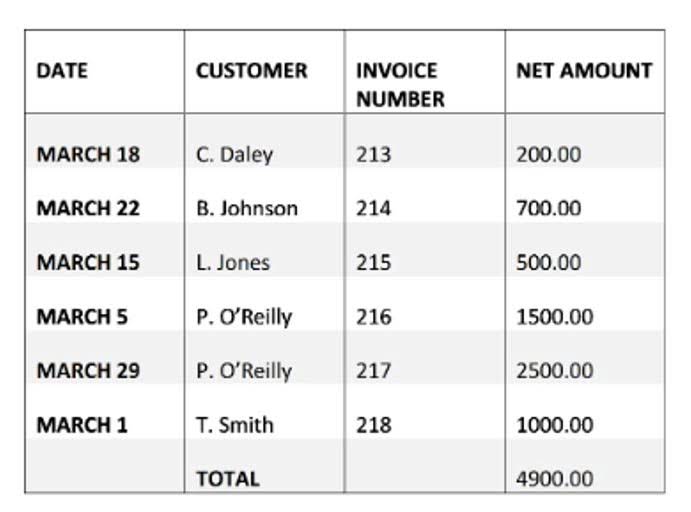
Meanwhile, tracking purchase orders is essential for ensuring that a business doesn’t pay twice for the same goods or services. Each purchase invoice is recorded as a line item in the purchases journal as shown in the example below. In this example, all the items are assumed to be inventory purchases and some information has been omitted to simplify the example. In practice, each line item would include the information listed above. Your company’s sales records are quite likely to prove your most valuable marketing information source.

Gain hands-on experience with Excel-based financial modeling, real-world case studies, and downloadable templates. Upon completion, earn a recognized certificate to enhance your career prospects in finance and investment. Purchase receipts confirm completed transactions and are essential for returns, audits, inventory tracking, and financial transparency. The journal entry for purchase return has to be made as soon as the return takes place. For this example, if a shop orders 10 boxes of pens but 2 boxes are damaged. online bookkeeping This return will be made through a purchase return journal entry.

purchases records meaning

Purchase orders will typically be drafted and submitted by your purchasing department as part of your company’s procurement process. You can then use the details included on your purchase order to track shipments from the supplier, make payments, and integrate this data into your broader inventory management system. A typical purchases journal has several columns to record the date, vendor account, invoice date, credit terms, accounts payable balance, and other account balances. All of these columns use source documents that were acquired throughout the voucher system. For example, the invoice is used to input the price and the date. The purchase order is used to record the terms of the vendor’s credit.

This information will help you determine which offers are the best fit for your needs and reduce the chance of buying unnecessary goods or services. SAP PIR centralizes procurement data within the ERP system, making it easily accessible to relevant stakeholders. This centralized repository ensures data consistency and eliminates the need for redundant data entry, improving data accuracy and reducing errors. The pipeline info record contains all the information related to the vendor commodities supplied through either pipes or pipelines.

Kategorien
Bookkeeping

Program: Professional Bookkeeping and Payroll, Certificate Ivy Tech Community College

professional bookkeeping

Working with a client and being able to provide them with the information to make the best decisions for their business comes first. Bookkeepers can focus on specific fields or industries to learn niche knowledge. Professionals with a unique industry understanding may have additional advancement opportunities.

professional bookkeeping

Everyday Transactions

The modules already contain practice sets for nine different businesses. With your purchase you’ll receive two more practice sets, giving you eleven in all. This will give you even more confidence and experience in various industries and the opportunity to work with additional types of clients. You get free answers to your on-the-job bookkeeping questions, everyday payroll questions and QuickBooks queries.

What does the bookkeeper role involve?

  • It gives you our turnkey process to start and build a successful accounting business.
  • Candidates can prepare for their exam by enrolling in a certified bookkeeper course, either through the credentialing organizations mentioned above, or through colleges and universities, including community colleges.
  • As of 2023, approximately 1.7 million people worked as bookkeeping, accounting, or auditing clerks.
  • Module 1 of the Professional Bookkeeper™ program teaches you the fundamentals of Bookkeeping.
  • While it is not required, completing a comprehensive course from a reputable institution boosts your skills and demonstrates to potential employers that you’re reliable and dedicated.

For freelance bookkeepers, becoming a Certified Bookkeeper, can get you new clients, increase your fees for your freelance practice. Certified Bookkeepers (CBs) are to bookkeeping what CPAs are to accounting—the elite of the profession. Becoming certified can be the step that gets you that promotion or new responsibilities in your current job, get—or get you a better, higher-paying job. Are you good at solving problems through research and creative thinking? If this sounds like you, you may want to consider a career in bookkeeping.

  • Give yourself peace of mind and let our account managers take care of your financial statements.
  • As you complete the practice sets in the Professional Bookkeeper™ course, you’ll become familiar with the processes involved in day-to-day Accounting and Bookkeeping tasks.
  • The Handbook for Self-Study CB Exam Prep includes registration for certification and all details on becoming a Certified Bookkeeper (CB).
  • Recertification can ensure that you have mastered the latest bookkeeping skills, techniques, approaches, and technologies.
  • A certified bookkeeper designation, qualifies you to perform all critical functions through the adjusted trial balance and basic payroll for small to medium-sized businesses.
  • Our ranking introduces the top bookkeeping certificate programs, what to expect, and typical costs.
  • Bookkeepers within this sector typically report to accountants and senior management.

Testimonials From Our Students

However, most employers will expect you to have additional education and some type of work experience. As a bookkeeper, you’re responsible for maintaining accurate financial records and handling all the accounting processes for a business. A bookkeeper records financial transactions of your business in a systematic bookkeeping manner. Such transactions need to be identified, accepted, classified and recorded in such a way that allows them to be presented in the form of financial statements. If you refund your purchase, you can no longer sign up for more of the included certification exams. If you’ve already registered for an exam or taken an exam before you request a refund, we will deduct the cost of the exam from your refund.

The bookkeeping profession may not be the best long-term career choice, but it plays an important role in the overall accounting career trajectory. Coursera’s editorial team is comprised of highly experienced professional editors, writers, and fact… A bookkeeper checks for errors when creating reports and managing the general ledger. You will check bank deposits for fraud, fix balance sheet errors, and maintain accurate payroll records. As a bookkeeper, you will verify and balance receipts, keep track of cash drawers, and check sales records. Bookkeepers also deposit money, cash checks, and ensure correct credit card transactions.

professional bookkeeping

Wade Lindenberger is a CPA with over 20 years of financial accounting and management experience in public accounting and private industry. He is currently Director of Finance and Administration for New Children’s Museum. Before his current position, he worked as the National Finance and Accounting Service Line Leader for Premier Alliance Group, a national professional services firm. Wade was also Director of the Finance and Accounting service line for the San Diego office of a global, publicly held professional services firm.

Skills you’ll gain

professional bookkeeping

While a certificate is not a requirement to become a bookkeeper, some professionals pursue certification to show their skills to employers and stand out in their job search. Find out more on bookkeeping accounting skills, how to earn accounting degrees and bookkeeping certifications, getting jobs, salary expectations, and more. The $599.95 package includes a library of self-paced classes, a month of live help and an optional two-day live class, but the $699.95 package is a better deal if you plan to take multiple certification exams. Along with the same learning resources, this plan includes exam fees for QuickBooks Online, QuickBooks Pro and Certified Bookkeeping Professional certifications, which would otherwise cost a total of $390. In addition to lessons, the course fee includes workbooks and the certification exam fee. Covering topics such as adjusting entries, recording inventory, correcting accounting errors and processing payroll, this course helps learners prepare for the national CB exam.

Financial Revisions

professional bookkeeping

The 32-credit program combines general business and entrepreneurial concepts and prepares students to work in bookkeeping and accounting. The curriculum includes classes in business communications, Excel basics, computer information systems and certified bookkeeping exam review. The online bookkeeping certificate program from Cuyahoga Community College District prepares students for entry-level jobs as bookkeeping clerks or office managers.

NACPB Accounting Fundamentals

If you’re unsatisfied with your membership, please email us at email  protected within 30 days of your purchase. We’ll issue a full refund unless you’ve received a certification — in which case, the membership is non-refundable. Hands-on exercises and practice tests build your bookkeeping confidence. Completing the Professional Certificate will enable you to feel ready and confident to embark on the job search to find a suitable bookkeeping role at an organization professional bookkeeping with your new skill set.

Give your bookkeeping career a jump-start with the certification that trains you with the most advanced bookkeeping courses. These courses focus on bookkeeping fundamentals to help improve bookkeeping knowledge and skills. For example, you might complete the Intuit Academy Bookkeeping Professional Certificate or several other bookkeeping https://www.bookstime.com/ courses offered by universities and companies on Coursera.

Kategorien
Bookkeeping

Manufacturing Overhead Costs: Step-by-Step Guide

manufacturing overhead examples

Developing cost is the cost incurred for implementing or introducing new products, methods and new applications or uses for existing products. Examples are raw materials used for research, depreciation of equipment used for research, research staff salaries, depreciation of building used for research, lighting expenses, etc. Overhead costs are the silent driving force behind every business operation, often overlooked but essential to smooth functioning.

Overhead Allocation According to GAAP Standards

manufacturing overhead examples

Our Manufacturing and Distribution team understands the need to develop procedures, build a functional organization and provide solutions to reduce… This may sound complex, but businesses must file their accounts according to GAAP standards. To achieve full GAAP compliance, you must allocate a portion of overhead to every item produced by an organization. Our dedicated press team is committed to delivering thought leadership, insightful market analysis, and timely updates to keep you informed. We uncover trends, share expert perspectives, and provide in-depth commentary on the latest developments for the sectors that we serve.

🧐Why Manufacturing Overhead Costs Matter

manufacturing overhead examples

This capability helps financial and operational teams collaborate more effectively on overhead management initiatives, with shared visibility into both the financial implications and operational contexts of overhead costs. Many manufacturers find that implementing robust BI solutions for overhead analysis represents a relatively low-cost investment that yields significant returns through improved decision-making and cost management. Companies can get a better understanding of their total manufacturing expenses by accounting for indirect materials, indirect labor, utilities, and depreciation. Proper management of manufacturing overhead leads to more accurate budgeting and improved financial performance. Then, determine the allocation base to distribute the overhead costs, selecting from options such as labor hours, machine hours, or production units. Start by listing all indirect costs, which may include expenses like factory rent, utilities, equipment depreciation, maintenance, and indirect labor.

  • Additionally, these specialized tools often provide robust audit trails and documentation of allocation methodologies, which supports compliance requirements and provides transparency in cost calculations.
  • Allocating overhead costs to products is one of the most important steps in cost accounting.
  • Businesses must monitor them closely to avoid overspending and align expenses with output.
  • Additionally, separately track and analyze volume variances to understand how production fluctuations affect true product costs without distorting ongoing financial evaluations.
  • The idea is to find a metric that correlates with your overhead costs and use it to distribute those costs across your products.
  • B2B orders typically require different handling, quality control, and documentation than B2C orders.

Allocating Manufacturing Overhead Via Direct Labor

The inventory of a manufacturer should report the cost of its raw materials, work-in-process, and finished goods. The cost of inventory should include all costs necessary to acquire the items and to get them ready for sale. Product costs are treated as inventory (an asset) on the balance sheet and do not appear on the income statement as costs of goods sold until the product is sold.

manufacturing overhead examples

These costs are necessary for the production to occur but do not directly contribute to the creation of the product itself. While selling, marketing, managerial, and other general business expenses are also types of overheads, they aren’t deemed manufacturing overhead. For a mixed fulfillment model, create separate overhead pools for your internal operations and for managing external partners. Internal overhead includes traditional factory costs, while your external partner overhead includes costs of vendor management systems, quality control for incoming shipments, and staff who manage these relationships. In firearms manufacturing, overhead typically includes specialized safety equipment, strict quality control processes, and regulatory compliance costs.

manufacturing overhead examples

We offer best payment terms, seasoned chemical consultants, fastest turnaround times, and minimum supply chain risks. Avoid mistakes and take your business to the next level by getting in touch today. Anna Troiano is a data-driven content strategist passionate about connecting technical storytelling with human insight. As Propel’s Content Marketing Manager and Editor in Chief of Converged, she leads brand voice, thought leadership, and narrative strategy across digital channels. A graduate of the University of Michigan and University College London, Anna combines analytical precision with creative depth to craft content that drives engagement, clarity, and growth.

manufacturing overhead examples

There are several ways to reduce manufacturing overhead, including optimizing utility usage, outsourcing non-core activities, and investing in technology like inventory management software. These are the supplies that don’t directly go into your products but are still essential for production. Think lubricants for machinery, cleaning supplies, or even the glue used in assembly.

  • Indirect costs, along with direct materials and direct labor, contribute to the total cost of goods manufactured.
  • Also, orders made could be consolidated, and excess purchases reduced, to save on costs while ensuring continuous supply.
  • This is applied using a predetermined overhead rate, which is calculated based on direct labor hours or machine hours.
  • Let’s define manufacturing overhead, look at the manufacturing overhead formula and how to calculate manufacturing overhead.
  • This can include security guards, janitors, those who repair machinery, plant managers, supervisors and quality inspectors.
  • Labor costs are key components of absorption costing, helping with productivity and cost control.

Assign overhead costs to work in process

This proactive approach ensures that businesses maintain cost-effective operations while improving productivity. For instance, if overhead costs are $50,000 and total labor income statement hours are 10,000, the rate is $5 per labor hour. Lastly, multiply the overhead rate by the allocation base for each product to estimate its share of indirect costs.

  • It is defined as- “A cost which in the aggregate, tends to change in direct proportion to change in the volume of output or turnover”.
  • Chemical and industrial manufacturers maintain cost structures to stay competitive and profitable.
  • Which overhead allocation method you choose will depend on your specific needs and circumstances.
  • On the other hand, indirect costs are due to elements not actively used during production but necessary for production anyway.

Q5: Are there industry-specific considerations when calculating manufacturing overhead costs?

Manufacturing overhead is added to the units produced within a reporting period, and is the sum of all indirect costs when creating a financial statement. It is added to the cost of the final product, along with direct material and direct labor costs. Yes, different industries face unique overhead considerations based on their production environments and regulatory landscapes. Industries with strict quality standards, such as medical devices or aerospace, carry significant Statement of Comprehensive Income overhead for quality assurance, testing, and documentation that must be appropriately allocated. Seasonal industries face special challenges in normalizing overhead across periods of vastly different production volumes.

Kategorien
Bookkeeping

Tax Information

In order to comply with the tax regulations, you should call the Office of Tax and Revenue, Customer Service Administration on (202) 727-4TAX to report any necessary changes. General InformationTaxpayers who currently have a Sales and Use Tax liability less than $200 per period are placed on an annual filing basis. Also, real property maintenance does not include the exterior or interior trash removal of recyclable material.

Sales and Use Tax

The customer must give you a completed Rhode Island sales and use tax resale certificate or one of several types of exemption certificates issued on or after July 1, 2021. If you have made no sales, you are still required to complete and file a return. Individuals who owe a Use Tax on non-business-related purchases may elect to pay once a year by entering the amount on the use tax line of their RI personal income tax return that is filed the following April 15th. Please note that the sales tax permits expire every June 30th and renewal applications are due annually by February 1st. Use tax returns are required from every retailer and from every person who purchases property subject to the use tax unless the tax has already been paid to a retailer authorized to collect it.

Help Center

Detective, cleaning, and maintenance services Gas, electricity, refrigeration, steam, telephone, and telegraph services There are two types of use taxes – Consumer Use Tax and Vendor/Retailer Use Tax. Use tax also applies to items purchased exempt from tax which are subsequently used in a taxable manner. The tax is generally imposed on the privilege of doing business in the state.

Rates & Geographic Information System (GIS) Information

New businesses estimate the amount of sales and use tax liability when applying for a license and are assigned a filing status. You will receive your tax license information by email, after which you can go to Taxpayer Access Point tap.utah.gov and create a TAP login to file and pay your taxes online. Obtain a sales & use tax number online using Taxpayer Access Point –TAP tap.utah.gov. Use the menu to the left for complete information about Utah sales and use taxes. There are no additional sales taxes imposed by local jurisdictions in Connecticut.

  • Under certain circumstances, you may be required to produce records for more than three years.
  • Sales tax in its truest definition applies only to intrastate sales where the seller and the customer are located in the same state.
  • Prepaid local tax is sales tax on on-road motor fuel paid at the wholesale level.
  • If you are purchasing a business, you could be held liable for previous sales and special fuel taxes the business may owe if you do not meet the requirements above.

Audits – Sales and Use Tax

  • The use tax rates are identical to the sales tax rates.
  • Once the audit is complete, the auditor will make a determination that may include tax, penalty and interest.
  • When Pennsylvania sales tax is not charged by the seller on a taxable item or service delivered into or used in Pennsylvania, the consumer is required by law to report and remit use tax to the Department of Revenue.
  • Sales, use, and gross receipts tax returns may be amended to report additional tax due or to request a refund of tax paid in error.

Ohio’s sales and use tax boundaries almost always correspond to the borders of a county. Counties and regional transit authorities in Ohio can add sales tax in small increments (multiples of 0.05%) up to a maximum of 3 percent. For example, if you buy an item online or in another state and no sales tax was charged, you might owe use tax when you bring the item home.

When combined with the state rate—which is 5.75 percent—the overall tax rate (state, local, and transit) cannot exceed 8.75 percent. The Ohio Sales Tax applies to the retail sale, lease, and rental of tangible personal property. File your monthly or quarterly return and check the „Yes“ box following the question, „Are you out of business now?“ If the customer is the State of Rhode Island, a RI municipality, or the Federal Government, the sale is exempt and no certificate is required. All retailers must report sales on an accrual basis. If your business expands and you open a second location, you must obtain a new permit for the new location.

Local Government Resources

What items have no sales tax in NJ?

Sales Tax Law

Exempt items include: most food sold as grocery items, most clothing and footwear, disposable paper products for household use, prescription drugs, and over-the- counter drugs.

Use tax applies to purchases of tangible personal property, products transferred electronically, and certain services when sales tax is due but is not collected by the seller. A business not required to register to collect sales and use tax should still register to pay business use tax. Any business that purchases goods or taxable services for use in Connecticut and does not pay Connecticut sales tax must pay the Connecticut use tax. Remote sellers with no physical presence in North Dakota are required to collect state and local sales tax on taxable sales made into North Dakota unless they qualify for the small seller exception.

What is the use tax in New Jersey?

What is the Use Tax rate? The New Jersey sales and use tax rate is currently 6.625%. No Sales Tax Paid – If no sales tax was paid on an item or service, you would need to calculate the tax using the 6.625% rate for New Jersey.

Taxi and Rideshare companies can now electronically file and pay the transportation commerce tax using our online filing and payment system. Access information and directory of city, county, and state tax rates for Local Tax. Access information and directory of city, county, and state tax rates for Lodging Tax. Access information and directory of city, county, and state tax rates for Rental or Leasing Tax. Access information and directory of city, county, and state tax rates for Sellers Use Tax.

Tax forms and filing informationIf your business is registered as a vendor, you must obtain a Certificate of Authority from the New York State Department of Taxation and Finance. Beauty, barbering, hair restoring, manicures, pedicures, electrolysis, massage, tanning, tattooing and other, similar services.Health and fitness clubs, weight control salons, gymnasiums, and similar establishmentsRead more Credit rating and credit reporting services

Exemptions

Access information and directory of city, county, and state tax rates for Consumers Use Tax. Access information and directory of city, county, and state tax rates for Sales Tax. To update the individual responsible for filing the sales and use and withholding returns, visit ND TAP. Use this tool to verify a permit number and business name identified on completed Certificate of Resale. A remote seller may make sales into North Dakota through a variety of ways including by phone, catalog, or internet. Sales and use, lodging and restaurant, and prepaid wireless 911 fee tax returns can be filed using our online portal, ND TAP.

Phone and In-Person Sales Tax Appointments Now AvailableIf you need help with sales tax forms or documents, you can meet with us by phone or in person. Sales Tax applies to most retail sales of goods and some services in Minnesota. Prepaid local tax is sales tax on on-road motor fuel paid at the wholesale level. Common questions are answered regarding what is subject to sales and use tax. Georgia sales and use tax generally applies to all tangible goods sold.

Penalty for nonpayment or late payment of tax You can make a free direct payment at the same time as filing your return through myconneCT. Businesses must complete and file Form OS‑114 to report all sales activity in Connecticut, even if no sales were made or no tax is due. DRS myconneCT allows taxpayers to electronically file, pay, and manage state tax responsibilities. If purchases are made in connection with a trade, occupation, business or profession, use myconneCT to register for business use tax. A penalty of $250 applies for the first day the person engages in business without a seller’s permit, and a penalty of $100 for each following day that the person engages in business without a sales and use tax seller’s permit.

Official websites use Ohio.gov

The seller must pay the tax whether or not the tax is collected from the purchaser. Sales taxes are considered “trust taxes” where the seller collects the tax from the customer and remits the collected tax to the appropriate taxing jurisdiction. Sales tax in its truest definition applies only to intrastate sales where the seller and the customer are located in the same state. Sales Tax is defined as a tax on the sale, transfer, or exchange of a taxable item or service.

The law provides generally for a tax on the sales at retail of tangible personal property, certain public utility services, and certain enumerated services. You may owe Use Tax on taxable goods and services used in Minnesota when no sales tax was paid at the time of purchase. Purchasers may provide a seller an exemption certificate showing that they are exempt from Utah sales and use taxes. If you purchase an item for use in Utah from an out-of-state retailer or on the internet and the retailer or internet seller does not collect the sales tax, then you must pay use tax on the item directly to the Tax Commission. The seller collects sales tax from the buyer and pays it to the Tax Commission.

Join 18,000+ sales tax pros who get weekly sales tax tips.

Tax Collection ChartsIf you need tax collection charts, call (202) 727-4TAX (4829) to have charts mailed to you or visit the Office of Tax and Revenue, Customer Service Walk-In Center located at th Street, SW, Suite W270, Washington, DC 20024. However, due to the new changes in the tax law, some annual filers may exceed the filing limitations, and their filing status should be changed. If District gross receipts are greater than $1 million, the minimum tax payable shall be $1,000. Corporation and Unincorporated Business Franchise TaxThe Corporation and Unincorporated Business Franchise tax rate is 8.25 percent. Health-club services” includes the use of, access to, or membership to, an athletic club, fitness center, gym, recreational sports facilities featuring exercise and other active physical fitness conditioning or recreational sports activities including swimming, skating, or racquet sports, or other facility for the purpose of physical exercise.

Your sales tax rate depends on where you are doing business in Utah and the type of business you are conducting. Sellers who have accepted an exemption certificate in good faith do not need to collect sales tax from the purchaser and may report the purchase price as exempt on their Utah Sales and Use Tax Return. Sales tax applies to retail sales and leases of tangible personal property, products transferred electronically, and certain services purchased for storage, use or consumption in Utah. The use tax rates are identical to the sales tax rates. The requirement to obtain a permit applies to individuals, corporations, partnerships, and all other business entities that will make sales in this state, regardless of the number of sales made or the amount of tax collected. There is a $100 fee for registering to collect sales and use tax.

Review the Raleigh Service Center’s new address and business hours. The Raleigh Service Center has moved to its new location on Highwoods Blvd following regular business hours.