
You may notice “POS PURCHASE” on your bank or credit card statement. This is just a record of the payment you made at a point of sale terminal. The POS purchase meaning here indicates that your card was used in person. POS stands for Point of Sale, and a POS purchase means you paid for something in person using a card.
Correct Details
Once the purchasing department confirms that goods have been received, the invoice goes to accounts for payment. An invoice is a document that the seller issues to the purchaser. An invoice is an important document, which is an issue along with goods, and when it reaches the purchaser, the purchaser will match the goods arrived with Purchase Order placed. The SAP Purchase Info Record allows organizations to maintain detailed information about their suppliers, including pricing, lead times, quality ratings, and How to Start a Bookkeeping Business delivery performance.
Purchase Book : Meaning, Format, and Example
It is the principal tool for managing outstanding debts and obligations. This journal assists firms in carefully capturing all credit purchases and ensuring that financial records reflect precise amounts owing to suppliers. Implementing procurement risk management practices at this stage is essential to effectively monitor risks related to supplier payments and cash flow. It is critical for monitoring the company’s payables and managing cash flow effectively. In accounting, businesses use the purchase journal to carefully record all credit purchases. They typically maintain the journal daily, and they record the entries in the general ledger.

Purchase Return Journal Entry ACCA Questions
- For example, buying snacks at a gas station or clothes at a mall can be listed as a POS purchase.
- The balance sheet and income statement offer a unique snapshot of a company’s health.
- The purchase book format is a method of keeping track of inventory purchases.
- In the purchase journal, each purchase transaction gets recorded in chronological order.
- While you can execute the instrument in any location, the law requires you to record the instrument under the property’s jurisdiction.
For example, X Ltd. returned goods worth $1,000, and Y Ltd. issued a credit note for that value. So next time X Ltd. will purchase $5,000, it only has to pay $4,000 as $1,000 will be adjusted against credit note. Most organizations have a separate purchase department responsible for the procurement of goods. If the goods are not available, the purchasing team will identify the supplier who specializes in needed goods, and they will place the order. Once the order has arrived, they will check that it matches the required description and quantity matches what was requested.
The purchase book is similar to the sales book, but instead of purchases journal recording sales, it records purchases. The purchase type columns will depend on the nature of business. The multi-column purchase journal should always have an ‘other’ column to record credit purchases which do not fit into any of the main categories.
- While not all purchase orders are exactly the same or feature the same information, there are some general points you can expect to see or include on a purchase order.
- Add in the fact that market research using your sales records is economical, and it’s a powerful combination.
- Ending inventory can change due to factors like sales, spoilage, or even theft.
- This entire process could happen in one day or over the course of several days.
What information is typically recorded in a Purchase Book?
We need to know what a purchase journal entry is like before we create our own. A solid format shall help you with recording everything properly. The format is well made so that no screw-up occurs while writing the journal entry of purchase.
- Next, you’ll include details on the seller, such as their company name and contact information.
- This can help simplify vendor relationship management and improve purchasing strategies by utilizing different methods of purchasing.
- When a company makes a credit purchase, it uses the purchase journal to record the transaction as an increase in accounts payable.
- In short, inventory reflects what’s on hand right now, while purchases represent what’s been added to stock.
- Examples include Social Security benefits, unemployment insurance, and welfare disbursements.
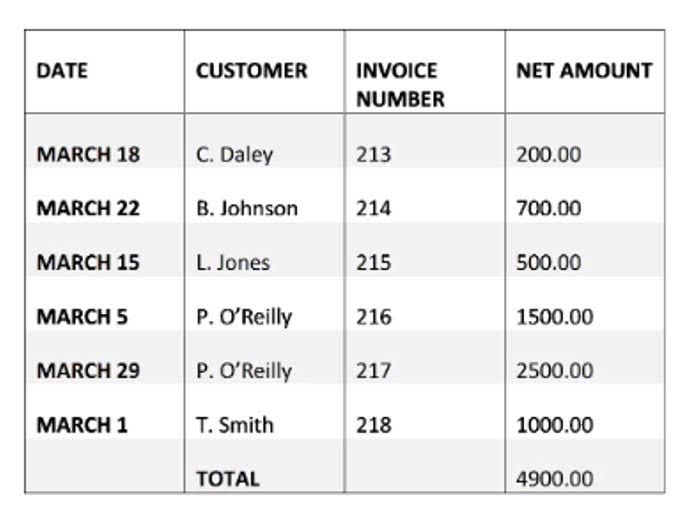
Meanwhile, tracking purchase orders is essential for ensuring that a business doesn’t pay twice for the same goods or services. Each purchase invoice is recorded as a line item in the purchases journal as shown in the example below. In this example, all the items are assumed to be inventory purchases and some information has been omitted to simplify the example. In practice, each line item would include the information listed above. Your company’s sales records are quite likely to prove your most valuable marketing information source.
Gain hands-on experience with Excel-based financial modeling, real-world case studies, and downloadable templates. Upon completion, earn a recognized certificate to enhance your career prospects in finance and investment. Purchase receipts confirm completed transactions and are essential for returns, audits, inventory tracking, and financial transparency. The journal entry for purchase return has to be made as soon as the return takes place. For this example, if a shop orders 10 boxes of pens but 2 boxes are damaged. online bookkeeping This return will be made through a purchase return journal entry.

Purchase orders will typically be drafted and submitted by your purchasing department as part of your company’s procurement process. You can then use the details included on your purchase order to track shipments from the supplier, make payments, and integrate this data into your broader inventory management system. A typical purchases journal has several columns to record the date, vendor account, invoice date, credit terms, accounts payable balance, and other account balances. All of these columns use source documents that were acquired throughout the voucher system. For example, the invoice is used to input the price and the date. The purchase order is used to record the terms of the vendor’s credit.
This information will help you determine which offers are the best fit for your needs and reduce the chance of buying unnecessary goods or services. SAP PIR centralizes procurement data within the ERP system, making it easily accessible to relevant stakeholders. This centralized repository ensures data consistency and eliminates the need for redundant data entry, improving data accuracy and reducing errors. The pipeline info record contains all the information related to the vendor commodities supplied through either pipes or pipelines.